
How Often Should a Pool Be Cleaned in Florida?
Harold Hatfield • April 14, 2026
IIf you own a pool in Florida, the answer is simple: every week, without exception. Florida's intense UV rays, daily summer rain, warm water, and year-round swim season create conditions that break down pool chemistry faster than almost anywhere else in the country. This article explains why weekly pool service is the Florida standard, what that service should include, how to know when your filter actually needs cleaning, and what happens when maintenance gets skipped. Whether you manage your own pool or are considering a professional service, what follows is the complete picture.
Why Florida Pools Are Different From Every Other State
Most pool maintenance guides are written for homeowners up north. People who close their pools in October and reopen them in May. That is not how it works here.
In Florida, your pool runs year-round. That means 52 weeks of active maintenance, not 20. The environment works against your water chemistry constantly, and four specific factors make Florida uniquely demanding.
Intense UV Rays: Florida's sun breaks down free chlorine faster than almost any other state. Without cyanuric acid (a stabilizer) to protect it, chlorine can burn off within hours of direct sunlight. Once it's gone, nothing is standing between your water and bacteria or algae.
Heavy Afternoon Rain: Summer storms are a daily reality across Florida. Every heavy rain dilutes your chemical levels, throws off your pH balance, and introduces organic debris directly into the water. A storm on Tuesday afternoon can completely undo a balanced pool from Monday morning.
Warm Water Year-Round: Algae thrives in warm water. In northern states, cold winters provide a natural reset. In Florida, algae has 365 days a year to find an opening. The moment free chlorine drops below 1.0 ppm, algae can begin forming within 24 to 48 hours.
Subtropical Debris and Landscaping:
Florida's lush vegetation means palm fronds, leaves, pollen, and organic matter fall into pools constantly. That debris breaks down in the water, consuming chlorine and feeding algae before most homeowners even notice it building up.
What Happens When You Skip a Week
Here is a real scenario that plays out for Florida pool owners every summer.
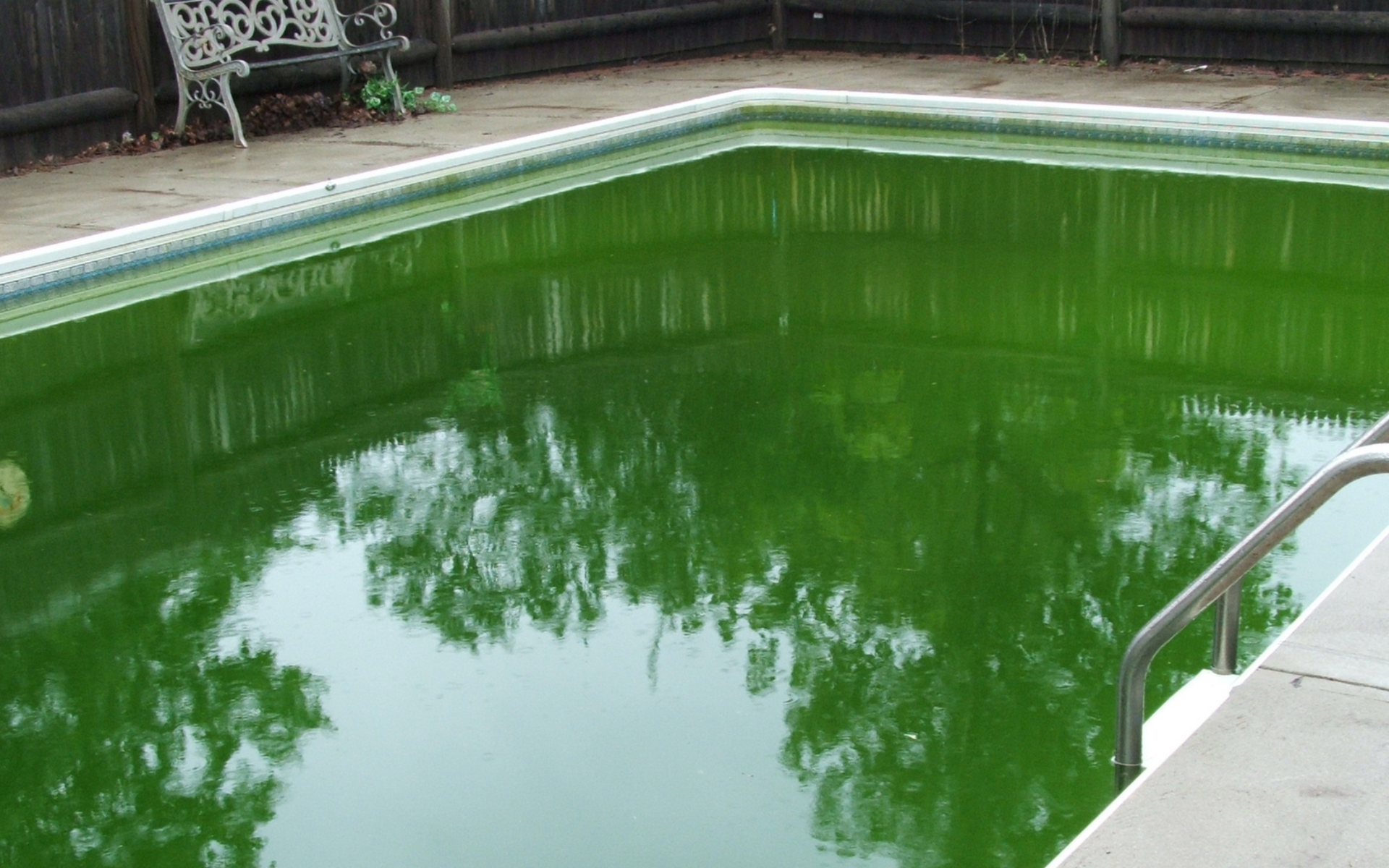
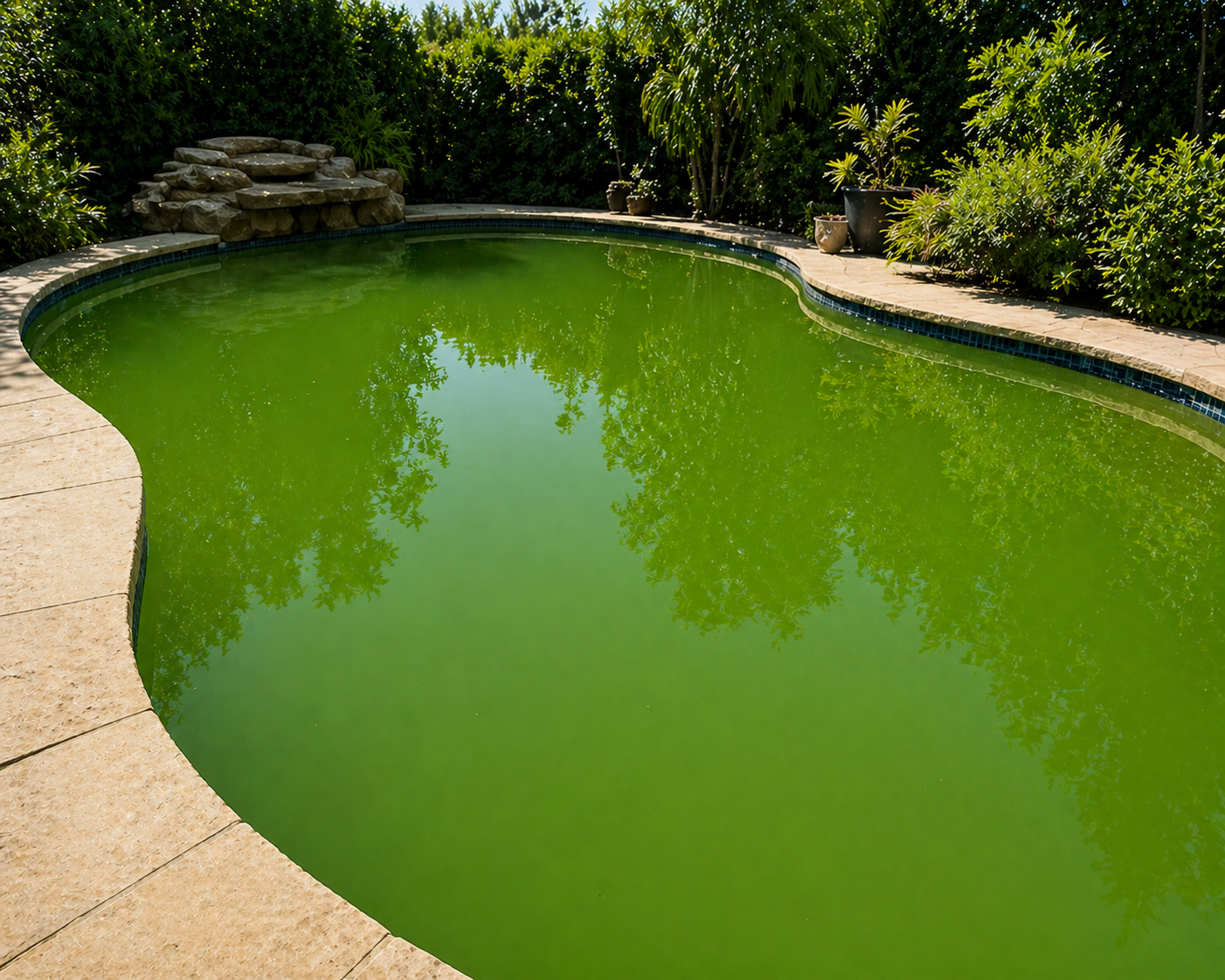
A homeowner skips service for two weeks in August. Life gets busy. It does not seem like a big deal. By the time they check the pool on a Saturday morning, the water has gone from clear to hazy. By Sunday, it has a green tint. By the following weekend, they are looking at a full algae bloom.
What started as skipping two weeks now requires an emergency treatment, an acid wash, or, in some cases, a full drain and refill. The cost runs anywhere from $250 to over $1,000, depending on how far the problem progresses.
Here is the chain reaction that makes it happen so fast:
- Chlorine drops below safe levels after just a few days without treatment
- pH drifts out of the 7.4 to 7.6 ideal range, making the remaining chlorine far less effective
- Algae spores that are always present in pool water find the opening they have been waiting for
- Water turns cloudy, then green, then becomes a problem that costs serious money to fix
- The filter works overtime trying to compensate and wears down faster than it should
- An emergency service call replaces what consistent weekly maintenance would have prevented entirely
Weekly service does not just keep your pool looking good. It protects a significant investment from a completely avoidable outcome.
What a Weekly Florida Pool Cleaning Should Include
Not all swimming pool service is created equal. A proper weekly visit is not just someone skimming the surface and calling it done. Here is what a thorough weekly cleaning actually covers and why each step matters.
1. Skimming the Surface - All floating debris including leaves, bugs, and pollen is removed before it sinks. Once organic matter reaches the bottom and begins to break down, it consumes chlorine and adds to the chemical load in the water.
2. Vacuuming the Pool Floor - Settled debris on the floor is vacuumed and removed. This reduces the organic burden in the water and helps maintain a stable chemical balance between visits.
3. Brushing Walls, Steps, and the Tile Line - Algae attaches to pool surfaces before it spreads into the water. Brushing walls, steps, and the waterline tile breaks up early-stage growth before it becomes visible or problematic.
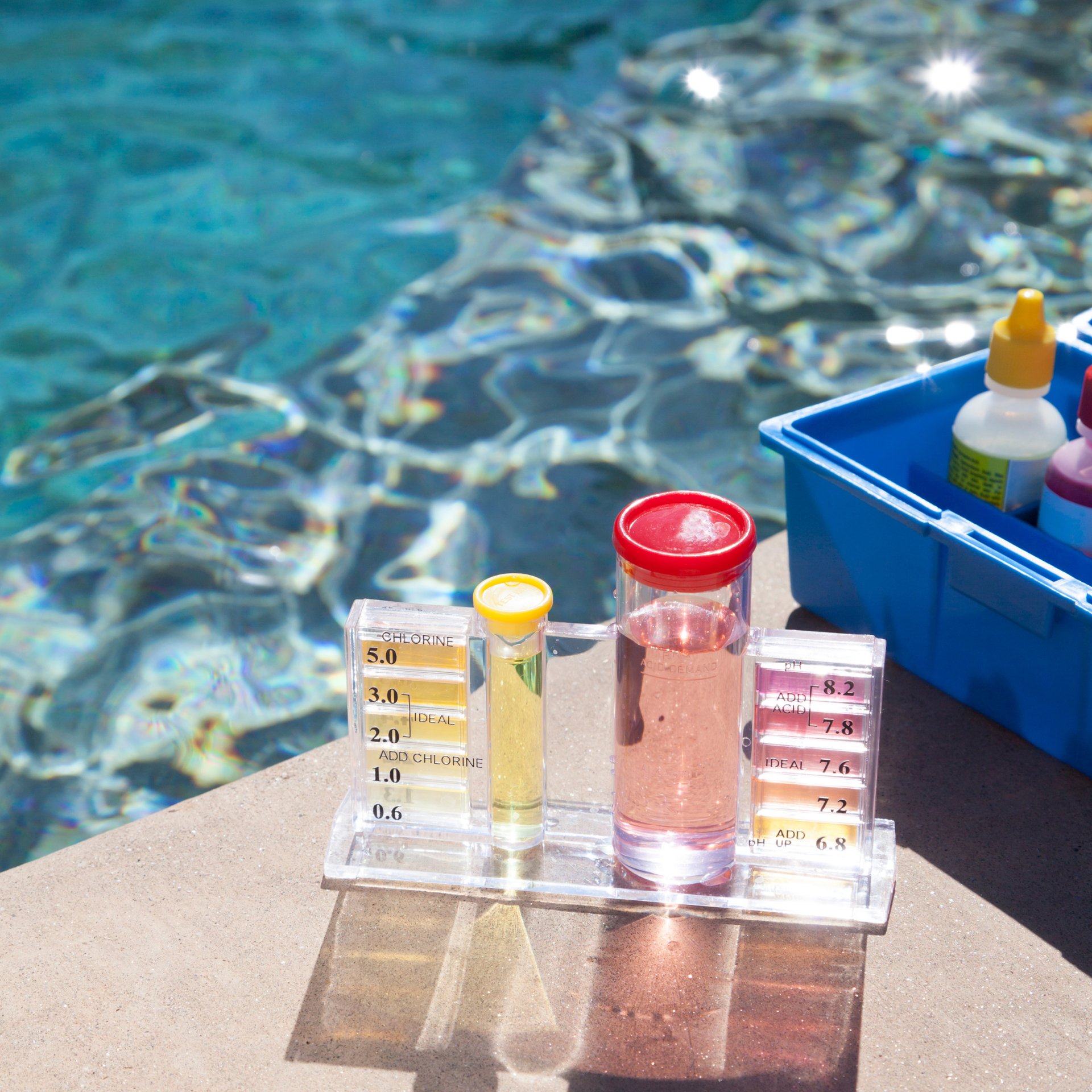
4. Chemical Testing and Balancing - This is the most critical step. Every visit includes testing and adjusting all key chemical levels:
- Free Chlorine at 1.0 to 3.0 ppm to keep bacteria and algae in check
- pH at 7.4 to 7.6 to protect swimmers and keep chlorine working at full strength
- Total Alkalinity at 80 to 120 ppm to stabilize pH and prevent it from drifting
- Cyanuric Acid at 30 to 50 ppm to shield chlorine from Florida's UV rays
- Calcium Hardness at 200 to 400 ppm to protect surfaces and equipment from scaling or corrosion
Worth noting: high pH alone can reduce chlorine effectiveness by up to 90 percent, even when the chlorine reading looks normal. Chemical balance is not just one number. It is all of them working together. The CDC recommends pool operators maintain free chlorine at or above 1 ppm in pools as a baseline for safe water. [Source: CDC Healthy Swimming]
5. Emptying Skimmer and Pump Baskets - Clogged baskets restrict water flow and force your pump to work harder than it should. Clearing them on every visit keeps your circulation system running efficiently and extends equipment life.
6. Visual Equipment Inspection - A trained eye on your pump, filter, and circulation system every week catches small problems before they become expensive repairs. A failing O-ring or a pressure reading that is trending up costs far less to address early than after a breakdown.
How Often Should You Clean Your Pool Filter?
This is one of the most misunderstood parts of Florida pool ownership, and the wrong answer is costing homeowners real money.
The correct answer is not a date on the calendar. Clean your filter when your pressure gauge tells you to.
Here is how it works. Immediately after a fresh cleaning, check your pressure gauge and write down the reading. That is your clean baseline. When the gauge climbs 8 to 10 PSI above that number, it is time to clean. Not before.
Cleaning too early actually reduces filtration performance. A thin layer of debris inside the filter media helps trap finer particles that would otherwise pass through. Strip that layer away too soon and your filter works less effectively, not more.
Florida pushes filters harder than most states. Pollen, subtropical debris, summer storms, and year-round use mean Florida pool owners reach that PSI threshold faster than homeowners in cooler climates. The rule does not change. Watch the gauge.
Florida pools use one of three filter types, and each requires a different approach:
Cartridge Filters are the most common in Florida homes. Rinse with a garden hose every 2 to 4 weeks during peak use. Deep soak in filter cleaning solution every 3 to 6 months. Replace the cartridge every 2 to 3 years.
Sand Filters are cleaned by backwashing rather than removing the media. Backwash every 4 to 6 weeks under normal conditions. Pools near trees or with heavy debris load may need it more often. Replace the sand every 5 to 7 years.
DE Filters provide the finest level of filtration of the three. Backwash monthly and recharge with fresh diatomaceous earth powder after each backwash. Pull the grids out for a full cleaning every 3 months. Replace any damaged grids immediately.
When Southern Sun Pool Service handles your pool, filter pressure is checked and logged on every visit. You never have to track it yourself.
Does a Screened-In Pool Need Less Service?
This comes up often from Florida pool owners who assume a screen enclosure reduces their maintenance needs.
The short answer is no.
A screen keeps out large debris and some insects. It does not block UV rays, fine pollen, dust particles, or airborne algae spores. It does not affect how quickly chlorine burns off in the Florida sun. It does not prevent pH from drifting after a heavy rain pushes moisture through the screen and into the water.
Screened pools in Florida still require full weekly chemical testing and balancing. The chemistry does not behave differently because there is a screen overhead.
What Florida's Rainy Season Does to Your Pool
Florida's rainy season runs from June through September. During this stretch, pools face their greatest challenge of the year.
A single heavy afternoon storm can dilute chlorine levels significantly, push pH out of range, and introduce bacteria and organic debris all at once. When that happens multiple times per week for four straight months, staying ahead of the chemistry requires consistent, disciplined maintenance.
During the rainy season, pools that see heavy bather loads may benefit from a mid-week chemical check in addition to weekly service. At minimum, weekly professional service is non-negotiable from June through September.
After any major storm, do not wait until the next scheduled visit if you notice cloudy water, a color change, or an unusual smell. Address it immediately. Algae that gets a 48-hour head start is significantly harder and more expensive to treat.
Do Florida Pools Require Service Year-Round?
Yes. There is no off-season for pool cleaning in Florida.
Winter temperatures in Florida are mild compared to the rest of the country. Your pool stays open and usable through December, January, and February. Slightly cooler water slows algae growth a little, but UV rays still break down chlorine. Rain still disrupts chemical balance. Equipment still needs monitoring.
A 52-week maintenance schedule is not an upsell. It is what Florida's climate actually requires to keep a pool safe and clean.
The Real Cost of Skipping Pool Service
Weekly professional pool service from Southern Sun Pool Service comes at a straightforward monthly rate with no hidden fees and no surprise charges.
The alternative often looks like this:
- Emergency algae treatments running $250 to $1,000 or more, depending on severity
- Acid washing for pools with staining or severe algae buildup, which can run $300 to $500
- Surface damage from prolonged chemical imbalance that requires resurfacing
- Premature pump or filter failure from running with unbalanced water for extended periods
Most Florida pools represent an investment of $30,000 to $80,000 or more to build and install. Weekly maintenance at a predictable monthly rate is the most cost-effective way to protect that investment over the long term.
Signs Your Florida Pool Needs Attention Right Now
Even with regular service, conditions can shift quickly in Florida's climate. Here are the warning signs that mean your pool needs attention before the next scheduled visit:
- Green or yellow water indicates an active algae bloom
- Cloudy or hazy water points to a chemical imbalance or a filtration issue
- A strong chlorine smell is actually a sign of low free chlorine and high chloramines, not too much chlorine
- Slippery walls or steps mean algae has begun attaching to surfaces
- Eye or skin irritation after swimming signals that pH or total alkalinity is off
- Foamy water indicates excess organic contaminants or improper chemical use
Do not wait if you see any of these. The longer the problem runs, the more it costs to correct.
What Every Florida Pool Owner Should Know
Florida pools are not a set-it-and-forget-it investment. The heat, the rain, the UV exposure, and the year-round swim season place demands on pool chemistry that do not exist in most other parts of the country.
Weekly service is the minimum standard, not a premium option. Your filter should be cleaned based on pressure readings, not a fixed calendar schedule. The rainy season requires extra vigilance. And there is no winter break from maintenance in Florida.
The good news is that none of this has to fall on you. Southern Sun Pool Service handles every part of the process so Florida pool owners can stop managing chemistry and start using the pool they paid for.
The Bottom Line on Florida Pool Cleaning
Florida pools are not a set-it-and-forget-it investment. The heat, the rain, the UV rays, and the year-round swim season make this state one of the most demanding environments for pool ownership anywhere in the country.
Here is what every Florida pool owner needs to remember:
Weekly service is not optional. It is the minimum standard for keeping your water safe, clear, and algae-free in Florida's climate.
Your filter pressure gauge is your guide. Clean the filter when the PSI rises 8 to 10 points above your baseline. Not before.
Skipping service is always more expensive than keeping it. One green pool treatment costs more than months of weekly service.
There is no off-season. Your Florida pool needs attention every single week, all 52 weeks of the year.
The good news is that none of this has to be your problem. That is exactly what Southern Sun Pool Service is here for. We handle every part of pool maintenance so you can stop worrying about chemicals, filters, and algae and start enjoying the water you paid for.
We service the following areas:

About Southern Sun Pool Service
Southern Sun Pool Service is a locally owned Florida pool cleaning company specializing in weekly pool maintenance, chemical balancing, and equipment care. We keep Florida pools crystal clear all year long.