
Why Is My Pool Green? Causes, Fixes, and How to Prevent It
Harold Hatfield • May 3, 2026
Why Is My Pool Green? The Real Cause
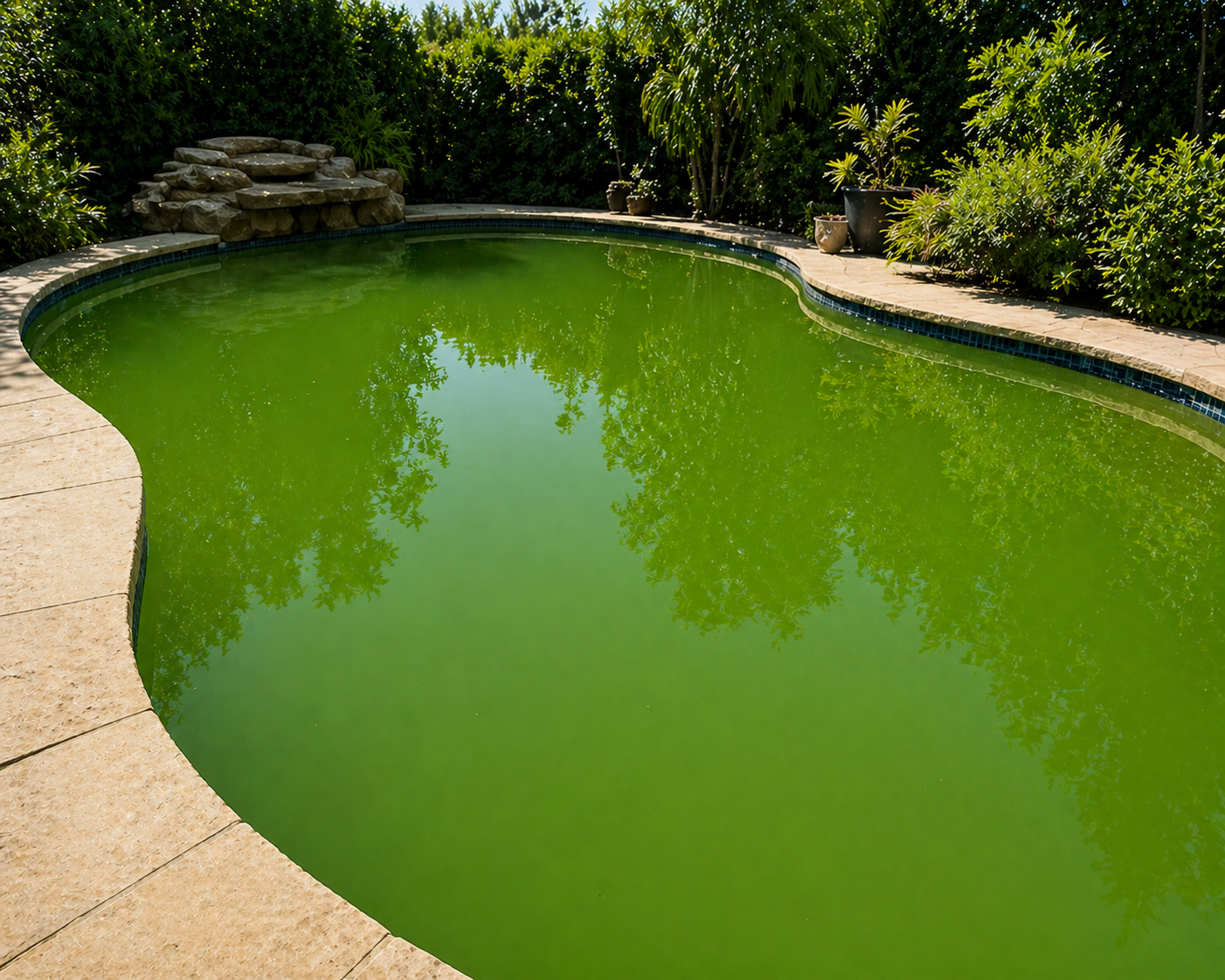
A green pool almost always means one thing: algae has taken over the water. That is why pool service is so important.
Algae are microscopic organisms that live in pool water all the time, in every pool, waiting for the right conditions to grow. When chlorine levels drop too low, algae seize the opportunity. They multiply rapidly and can turn a clear pool visibly green in as little as 24 to 48 hours, especially in Florida's warm, sun-drenched water.
The number one cause is low or zero chlorine. When chlorine drops below 1.0 ppm, algae can grow. But low chlorine is rarely the only factor. Here is what actually creates a green pool:
Low or Zero Free Chlorine: This is the trigger. Chlorine is the only thing standing between your water and an algae bloom. Once free chlorine drops below 1.0 ppm, protection is effectively gone. In Florida's summer heat, that can happen within a day or two of a missed treatment.
High pH: This one catches homeowners off guard. When a pool's pH is over 7.8, even high levels of chlorine destabilize and cannot sanitize. A pool can have a chlorine reading that looks adequate and still go green because the pH has drifted high enough to make that chlorine almost useless.
No Cyanuric Acid (Stabilizer): Without this chlorine stabilizer, UV rays destroy chlorine too quickly. Florida's intense sun can burn off unprotected chlorine within hours of direct exposure. Without cyanuric acid at 30 to 50 ppm, your chlorine disappears before it can do its job.
Poor Circulation: Even if the chemistry is close to where it should be, weak circulation makes it much harder to distribute sanitizer evenly and remove contaminants. Stagnant corners, steps, and shaded areas are where algae gets its first foothold.
Dirty or Clogged Filter: A filter that cannot move water properly cannot remove algae spores before they take hold. If your pressure gauge is running 8 to 10 PSI above your clean baseline, your filter is working against you.
Rain: As more rainwater fills your swimming pool, the chlorine levels become diluted. When the chlorine in a pool goes below 1 ppm, algae has the perfect scenario to start growing. In Florida, a single heavy afternoon storm can drop chlorine to unsafe levels if the pool was already running low.
Pollen and Organic Debris: Fertilizers, leaves, and pollen — all common in Florida — introduce phosphates which serve as algae food. Organic matter in the water feeds algae growth and consumes chlorine, creating the exact conditions algae need to bloom.
My Pool Turned Green Overnight — Is That Normal?
It feels sudden, but it rarely is.
A pool that looks perfectly clear on Friday and turns green by Sunday did not develop an algae problem over the weekend. The conditions for that bloom — low chlorine, rising pH, and an organic load building up — had been developing for days or weeks before it became visible. The green color is simply the point where the algae population became large enough to be seen.
Green water is often the first obvious sign that the pool has moved out of balance, but the underlying causes usually start earlier.
Florida pool owners who travel are especially vulnerable to this. A pool that looks fine before a week-long vacation can return to a full green bloom because the chemistry was left unmanaged. In Florida's heat, seven days without maintenance is enough time for a significant algae bloom to fully develop.
Could It Be Something Other Than Algae?
Not every green pool is an algae bloom. Before you start shocking, it is worth identifying what you are actually dealing with.
Clear water with a greenish tint — This is often not algae at all. Clear pool water with a green tint may be from pollen, chlorine-resistant algae, or most often from a too-high pH level. It can also be caused by copper oxidizing in the water, which happens when pool equipment, certain chemicals, or source water introduces metals into the pool. If your walls look clean, test for metals before adding shock.
Cloudy green water — This is almost certainly algae. If your pool is green and cloudy, it's likely an algae problem. Proceed with the treatment steps below.
Swamp-like dark green or black water — This is a severe bloom and the most expensive to treat. It requires aggressive shock treatment and possibly an acid wash, depending on how long it has been neglected.
Yellow or mustard-colored tint — This can be mustard algae, a chlorine-resistant strain that clings to pool walls and looks like sand or dirt. It requires a specialized algaecide in addition to shock treatment.
Knowing which situation you are dealing with determines how much shock to use and what the treatment process looks like.
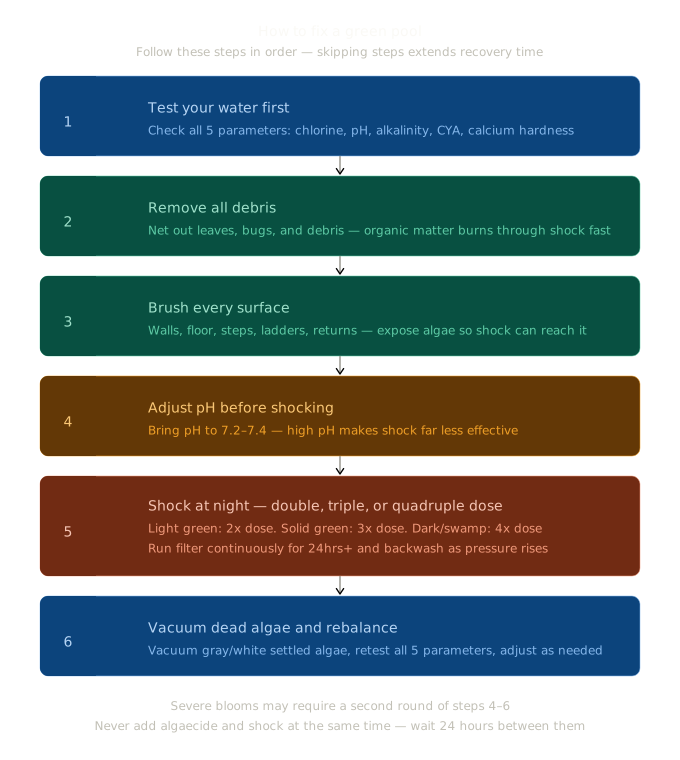
How to Fix a Green Pool: Step-by-Step
If your pool is green right now, here is the correct process to clear it. Do not skip steps and do not add products out of order.
Step 1: Test Your Water First
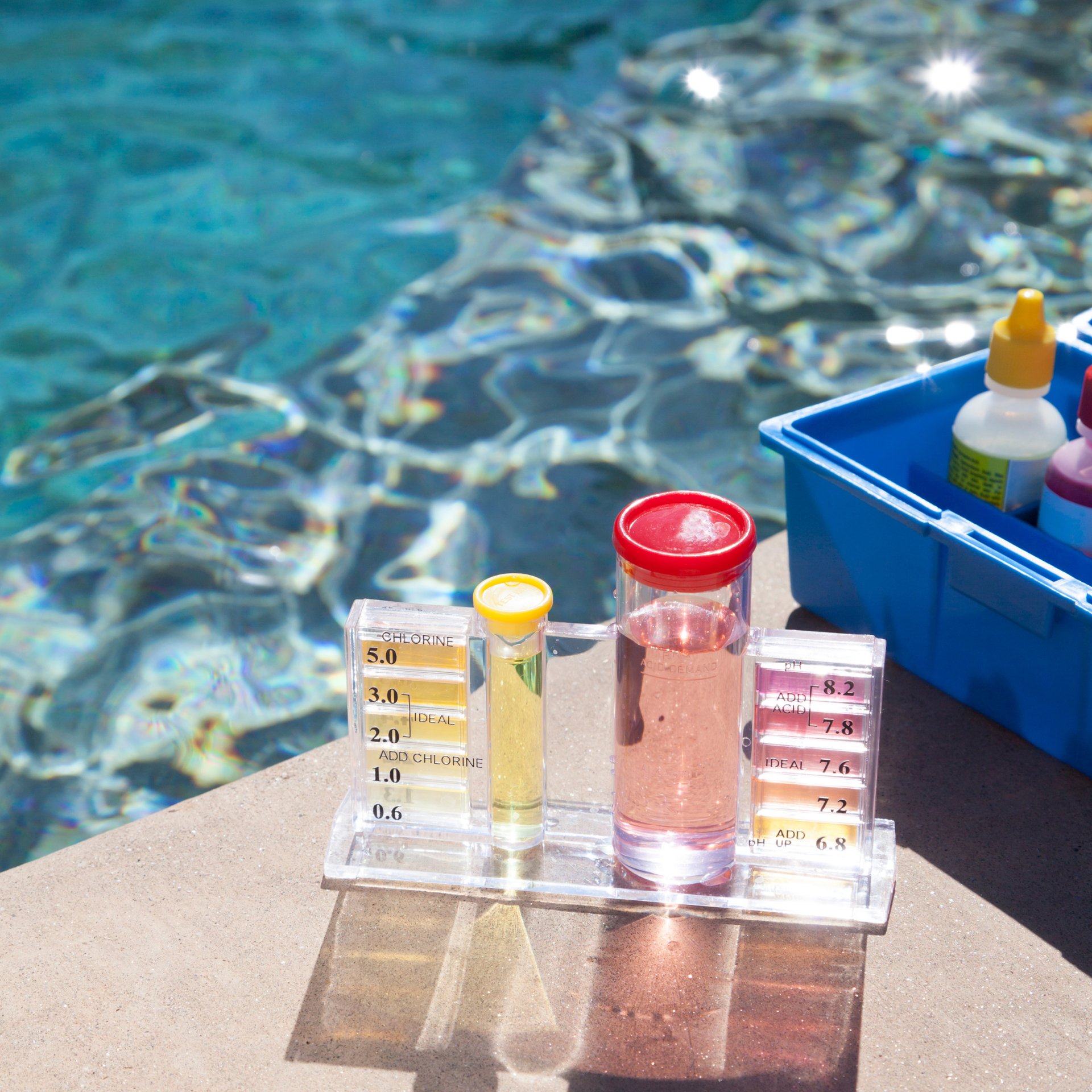
Before adding anything to the pool, test all five chemical parameters: free chlorine, pH, total alkalinity, cyanuric acid, and calcium hardness. You need to know where your chemistry stands before you treat it. A green pool with a copper problem needs a sequestrant, not shock. Treating the wrong problem wastes money and time.
Step 2: Remove Debris
Net out all visible leaves, bugs, and debris from the surface and floor. Organic debris burns through shock chlorine fast, so remove as much as possible first. Every piece of organic matter you remove before shocking is one less thing consuming your chlorine.
Step 3: Brush Every Surface
This step matters more than most people realize. Brushing removes the thin layer algae uses to cling and hide. Brush the walls, floor, steps, ladders, and around return jets thoroughly. You are exposing the algae to the water so the shock can reach it. Do not skip this step.
Step 4: Adjust pH Before You Shock
This is critical and commonly missed. High pH weakens chlorine. Adjust pH first. A common target range for shocking is 7.2 to 7.4. If your pH is at 7.8 or above, the shock you are about to add will be significantly less effective. Bring it down before proceeding.
Step 5: Shock the Pool — At Night
This is the main event. Use calcium hypochlorite (cal-hypo) shock with at least 70 percent available chlorine. One pound of shock treats 10,000 gallons of pool water under normal conditions. But since the pool is green, you need to double, triple, or quadruple the dosage depending on the severity of the bloom.
Here is a basic dosing guide based on severity:
- Light green or teal tint: Double the standard dose (2 lbs per 10,000 gallons)
- Solid green: Triple the dose (3 lbs per 10,000 gallons)
- Dark green or swamp-like: Quadruple the dose (4 lbs per 10,000 gallons)
Always shocked in the evening. After you shock at night, run your filter system for at least 8 hours overnight. Even better, run your filter 24 hours a day until your pool is completely clear. UV rays during the day destroy chlorine rapidly. Shocking at night gives the treatment its best chance to work.
Step 6: Run the Filter Continuously
Do not turn the pump off during the treatment process. Run the pool filters until the water turns clear. Depending on the levels of algae in your water, this could be several days. Backwash or clean your filter as the pressure rises during this process. A clogged filter during green pool treatment significantly slows recovery.
Step 7: Vacuum Dead Algae
As the shock kills the algae, it will turn from green to gray or white and begin settling on the pool floor. Vacuum this dead material out of the pool as it accumulates. Do not run it through the filter if possible — vacuum to waste if your equipment allows it, so the dead algae exits the pool entirely rather than recirculating.
Step 8: Test and Rebalance
Once the water clears, retest all five parameters and bring everything back into the correct range. Low chlorine at this stage will cause an immediate rebloom. Pay special attention to pH, alkalinity, and chlorine levels. Low chlorine will lead to future algae and the return of a green pool.
Step 9: Repeat If Needed
Severe blooms almost always require more than one shock treatment. If you follow this method, you can successfully kill all the algae in your pool in less than 5 days. Do not expect overnight results on a seriously green pool. It took time to develop and it takes time to clear.
Can You Clear a Green Pool Overnight?
This is one of the most searched questions about green pools, and the honest answer is: sometimes, but not always.
For a light green or teal pool where the bloom is in early stages, an aggressive double shock treatment at night combined with 24 hours of continuous filtration can produce significant improvement by the next morning. Some products marketed as two-step systems — a shock followed by a flocculant — can drop dead algae to the pool floor within 24 hours if the bloom is moderate.
The average green algae bloom takes between 4 to 5 days to clear. A severely green or swamp-like pool almost never clears in a single day regardless of how much shock is added. Expect the water to go from green to cloudy to hazy to clear over the course of several days of continuous filtration.
The fastest legitimate approach: shock at the correct dosage in the evening, run the pump on high continuously, backwash the filter as soon as pressure rises, vacuum dead algae from the floor as it settles, and retest every 24 hours. That gives the treatment the best possible chance to clear the water quickly.
What will not work: underdosing the shock, shocking during the day, turning the pump off overnight, or skipping the pH adjustment before treating. Each of these mistakes extends the recovery timeline significantly.
How to Shock a Green Pool the Right Way
Shocking a green pool is not the same as a standard maintenance shock. Here is a direct summary of what correct green pool shocking requires:
Use calcium hypochlorite shock with at least 70 percent available chlorine. Granular liquid chlorine tabs will not deliver the chlorine concentration needed to knock out an active bloom quickly enough.
Before shocking, brush walls, floor, steps, ladders, and around returns. Shock kills algae. The filter removes it. Start clean.
Adjust pH to 7.2 to 7.4 before adding shock. This is non-negotiable. Shock added to high-pH water loses a significant portion of its effectiveness before it even begins working on the algae.
Add shock in the evening and distribute it evenly around the pool, pouring slowly in front of return jets for maximum distribution.
Run the pump continuously. Do not turn it off.
Backwash the filter as the pressure rises. A clean filter removes dead algae. A clogged one traps it and recirculates it.
Retest after 24 hours. If free chlorine is back near zero and the water is still green, shock again at the same dose. The pool has a chlorine demand that needs to be met before the water can clear.
Never add algaecide at the same time as shock. Shocking should be done prior to using an algaecide. If used simultaneously, they'll cancel each other out. Let the shock work for at least 24 hours before adding algaecide.
How Much Does It Cost to Fix a Green Pool in Florida?
This is what most homeowners do not find out until it happens to them.
A mild algae bloom caught early — slightly green, still some visibility — can often be treated with $30 to $80 in shock and chemicals if you catch it quickly.
A moderate green pool with no visibility through the water requires multiple shock treatments, possible acid wash of filter media, and several days of elevated chemical use. Professional remediation for this level typically runs $250 to $500.
A severe green pool — dark green, swamp-like, no visibility of the bottom — often requires a full drain, acid wash, and refill. This process costs $500 to $1,000 or more, depending on pool size and the extent of staining or surface damage.
Equipment damage from running in severely unbalanced green water adds to this total. Filters forced to run at high pressure for extended periods wear faster. Pumps running in chemically compromised water develop seal issues. A single severe algae bloom that goes untreated long enough can trigger equipment costs that far exceed the treatment itself.
Why Florida Pools Turn Green Faster Than Anywhere Else
Florida pool owners experience algae blooms at a higher rate than homeowners in most other states, and the reasons are specific to this climate.
Florida's climate creates ideal conditions for algae. Algae grows fastest in water above 77°F. Sunshine fuels algae growth and breaks down chlorine faster, creating a double problem. Afternoon thunderstorms dilute pool chemicals, dropping chlorine levels below effective sanitizing range. Florida's humidity accelerates chemical consumption and promotes algae spore survival in the air.
Florida pools also run 52 weeks a year. There is no off-season where cold temperatures reset the system and slow algae growth. Algae has 365 days a year to find an opening, and in Florida's warm water, once it finds one, it moves fast.
This is why a pool that seems fine on Monday can be visibly green by Friday — not because something catastrophic happened, but because chlorine depleted, pH drifted, and algae did exactly what Florida's climate allows it to do.
How to Prevent a Green Pool in Florida
Clearing a green pool is expensive, time-consuming, and frustrating. Preventing one is far simpler and costs far less.
Here is what consistent prevention requires:
Maintain free chlorine at 2.0 to 3.0 ppm throughout the summer months. The lower end of the recommended range is not adequate in Florida's heat. Give yourself a buffer just dont go over 5.0 then it will be to strong.
Keep pH between 7.4 and 7.6 at all times. High pH silently destroys chlorine effectiveness without changing the reading on your test kit. Test and adjust weekly.
Maintain cyanuric acid at 30 to 50 ppm to protect chlorine from UV degradation. Without it, Florida's sun burns through your sanitizer in hours.
Brush walls and steps every week. Algae attaches to surfaces before it spreads to the water. Weekly brushing breaks up early-stage growth before it becomes visible.
Test after every significant rainstorm. Florida's afternoon thunderstorms dilute chemicals quickly. Do not wait until your next scheduled service if you notice any change in water color or clarity after a storm.
Run the pump long enough each day. Circulation distributes sanitizer and prevents the stagnant water conditions that algae prefers. During Florida's summer, running the pump 10 to 12 hours per day is the minimum. Many professionals recommend running it continuously during heavy algae season.
Never skip a week of service. In Florida's climate, one missed week during summer is often all it takes for a bloom to develop. Consistency is not optional here — it is the entire strategy.
What Every Florida Pool Owner Should Take Away
A green pool is not a mystery. It is a predictable outcome of conditions that are entirely preventable with consistent, correctly executed weekly maintenance.
Chlorine depletes. pH drifts. Rain disrupts chemistry. Florida's heat accelerates everything. When those factors combine without weekly maintenance keeping them in check, algae blooms. Every time.
The good news is that understanding this makes prevention simple. Keep chlorine in the right range, keep pH stable, protect your chlorine from UV rays with adequate cyanuric acid, and brush your pool every single week. Do those things consistently and a green pool becomes a problem you read about, not one you experience.
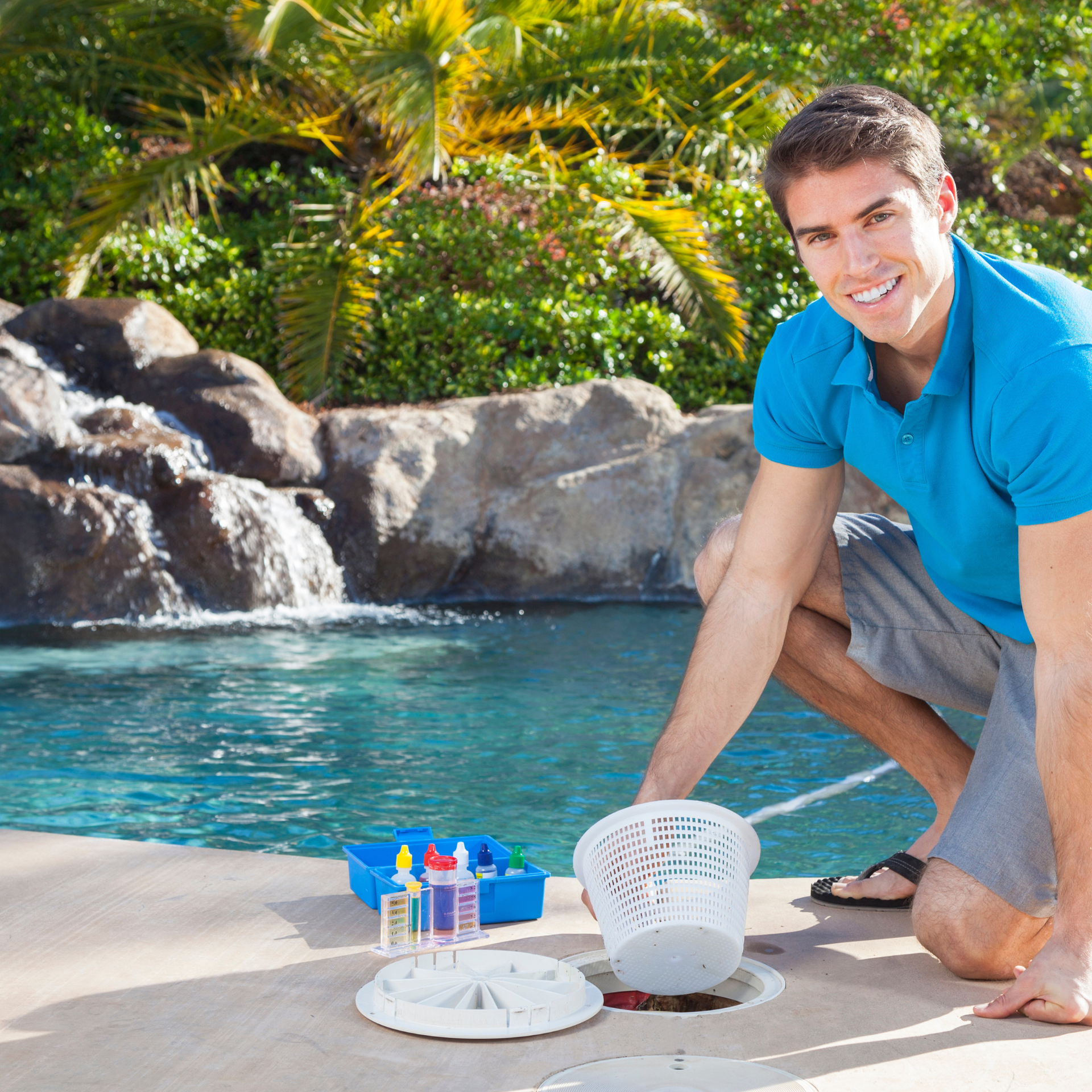
If managing all of that every week sounds like more than you want to take on — that is exactly what Southern Sun Pool Service is here for. We test, balance, brush, and inspect your pool every single week so the conditions that create green water never get the chance to develop. Contact us today for top-notch pool cleaning service.
You should be swimming in your pool, not spending your weekend trying to fix it.
Need pool help? We service the following areas:
Learn More
About Southern Sun Pool Service
Southern Sun Pool Service is a locally owned Florida pool cleaning company specializing in weekly pool maintenance, chemical balancing, and equipment care. We keep Florida pools crystal clear all year long.